Horizon Europe – 2021-2027

The general objective of the Programme is to deliver scientific, technological, economic and societal impact from the Union’s investments in R&I so as to strengthen the scientific and technological bases of the Union and foster the competitiveness of the Union in all Member States including in its industry, to deliver on the Union strategic priorities and to contribute to the realisation of Union objectives and policies, to tackle global challenges, including the SDGs by following the principles of the 2030 Agenda and the Paris Agreement, and to strengthen the ERA.

Budget

95.5 billion euro

Bénéficiaires

All beneficiaries

Type de financement

Grant – Co-financing

Budget
95.5 billion euro
Bénéficiaires
All beneficiaries
Type de financement​
Grant – Co-financing

Following on from Horizon 2020, Horizon Europe is the EU’s key funding programme for research and innovation.

Objectives

  • To develop, promote and advance scientific excellence, to support the creation and diffusion of high-quality new fundamental and applied knowledge, of skills, technologies and solutions, to support training and mobility of researchers, to attract talent at all levels and contribute to the full engagement of the Union’s talent pool in actions supported under the Programme
  • To generate knowledge, strengthen the impact of R&I in developing, supporting and implementing Union policies and support the access to and uptake of innovative solutions in European industry, in particular SMEs, and in society to address global challenges, including climate change and the SDGs
  • To foster all forms of innovation, facilitate technological development, demonstration and knowledge and technology transfer, strengthen deployment and exploitation of innovative solutions
  • To optimise the Programme’s delivery with a view to strengthening and increasing the impact and attractiveness of the ERA, to foster excellence-based participation from all Member States, including low R&I performing countries, in the Programme and to facilitate collaborative links in European R&I

Structure

Pillar I “Excellence Science”:

  • European Research Council (ERC)
  • Marie actions Skłodowska-Curie (MSCA)
  • Research infrastructures

Pillar II Global challenges and European Industrial Competitiveness:

  • Cluster Health
  • Cluster Culture, Creativity and Inclusive Society
  • Cluster Civil Security for Society
  • Cluster Digital, Industry and Space
  • Cluster Climate, Energy and Mobility
  • Cluster Food, Bioeconomy, Natural Resources, Agriculture and Environment
  • Non-nuclear direct actions of the Joint Research Centre (JRC)

Pillar III “Innovative Europe”:

  • European Innovation Council (EIC)
  • European innovation ecosystems
  • European Institute of Innovation and Technology (EIT)

Priorities

  • Cancer
  • Adaptation to climate change including societal transformation
  • Healthy oceans, seas coastal and inland waters
  • Climate-neutral and smart cities
  • Soil health and food

For the period 2025-2027, there will be a focus on these priorities:

  • Green Transition
  • Digital Transition
  • A more resilient, competitive, inclusive and democratic Europe

In this context, the following 9 partnerships will be established:

    • Brain Health
    • Forests and Forestry for a Sustainable Future
    • Innovative Materials for EU
    • Raw Materials for the Green and Digital Transition
    • Resilient Cultural Heritage
    • Social Transformations and Resilience
    • Solar Photovoltaics
    • Textiles of the Future
    • Virtual Worlds.

Comment ça marche ?

Need help with your public financing ?

Les autres fonds européens

LIFE

Transition vers une économie durable grâce aux énergies renouvelables

FSE+

Investir dans les citoyens pour une Europe sociale forte

ERASMUS+

Permet le développement des étudiants et de connecter l’Europe

CERV

Promotion de la diversité, l’égalité et les droits dans l’Union Européenne

Horizon Europe

Axée sur l’innovation et la recherche

Digital Europe

Accélérer la transformation numérique

Questions fréquentes

Vous ne trouvez pas la réponse que vous cherchez ?

Le Fonds européen de développement régional (FEDER) est un des principaux instruments financiers de la politique de cohésion de l’Union européenne. Pour la programmation 2021-2027, le FEDER a deux objectifs majeurs : le développement solidaire et durable des territoires et la compétitivité de l’économie. Il vise à réduire les écarts entre les régions et à favoriser le développement dans divers domaines d’intervention comme l’environnement, les énergies renouvelables et le développement urbain.

Pour la période 2021-2027, des milliards d’euros ont été alloués pour soutenir les projets dans les États membres et les régions ultrapériphériques. Les fonds sont répartis en fonction des besoins spécifiques de chaque région, et un taux de cofinancement est généralement appliqué.

Si vous avez un projet qui correspond aux objectifs et aux domaines d’intervention du FEDER, vous pouvez déposer un dossier de demande via le portail des aides. Il est essentiel de suivre la méthodologie du FEDER pour maximiser vos chances d’obtenir une subvention.

Des exemples de projets cofinancés par le FEDER sont souvent publiés sur le portail des aides et sur d’autres plateformes de la Commission européenne. Ces exemples peuvent donner une bonne idée des types de projets qui reçoivent un financement.

La programmation 2021-2027 met un accent particulier sur les transitions écologique et numérique. Elle vise également à renforcer la résilience des régions européennes face aux défis actuels et futurs.

Pour découvrir davantage sur le FEDER, vous pouvez écouter des podcasts, lire des articles, ou même participer à des webinaires et des sessions de formation. Le but est de vous fournir toutes les informations nécessaires pour naviguer efficacement dans le monde des fonds européens.

Ces questions et réponses ne sont qu’un aperçu des nombreux aspects du FEDER. Pour plus d’informations, n’hésitez pas à consulter le portail officiel et les ressources associées.

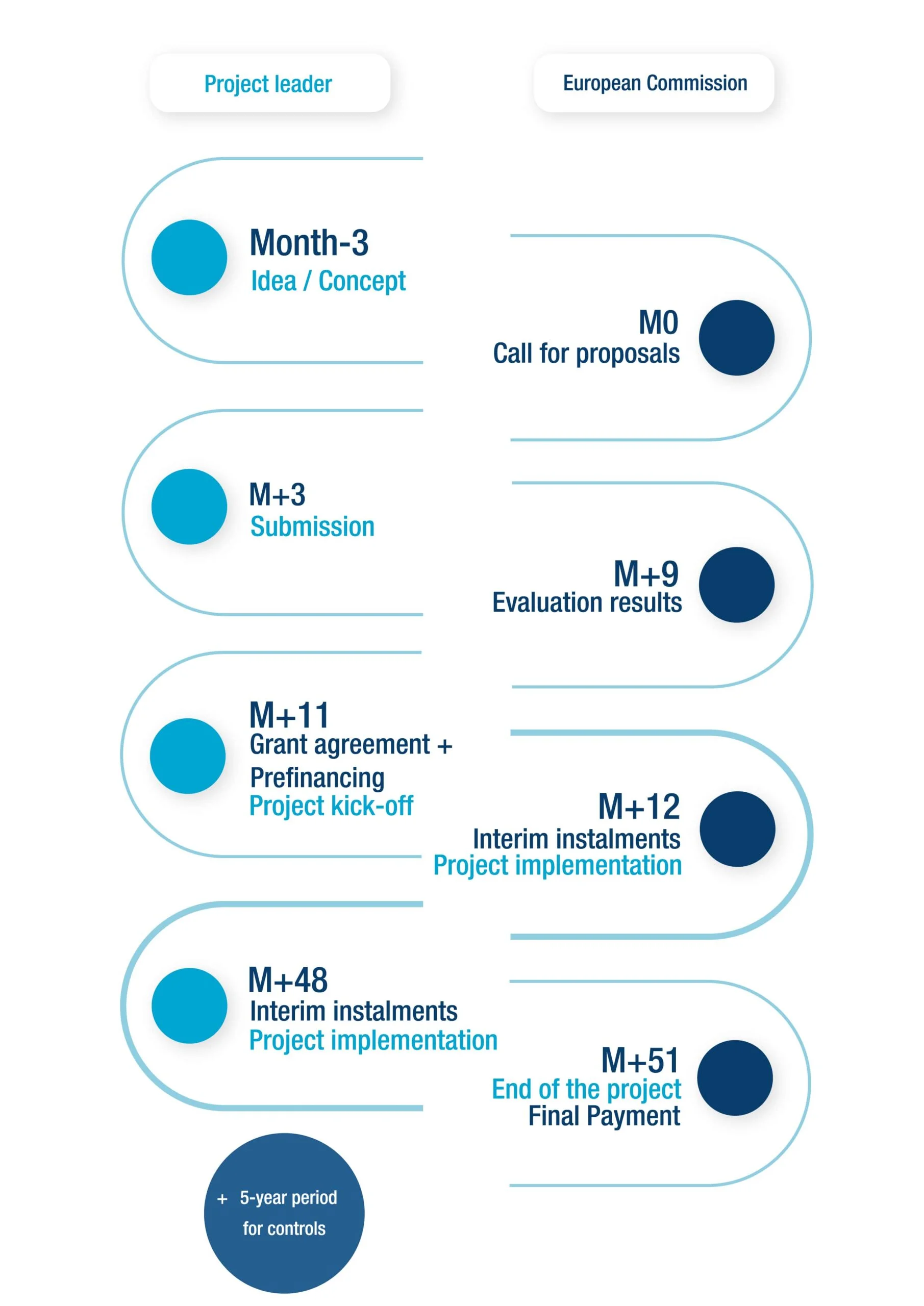
Need help with your public financing ?

Similar news

2 February 2023

How to identify European funds?

Lire l'aticle

1 February 2023

10 tips for building a grant file

Lire l'aticle